Japanese Kimono Symbols and Their Meaning: Dragon, Crane, Koi, Kitsune and More
Most motifs on a Japanese kimono are not decoration for its own sake. Each one carries a wish or a quality: the crane stands for long life, the koi for perseverance, the dragon for power and protection, the fox for cleverness and a link to the spirit world, and the cherry blossom for the beauty of the passing moment. Knowing the kimono symbols meaning behind a print helps you choose a piece that says something you actually want to say, instead of picking a pattern only by color.
This guide walks through the motifs you see most often on modern kimono jackets, haori and cardigans, where each one comes from, what it traditionally expresses, and how to wear it well.
Why symbols matter so much on a kimono
In Japanese dress, pattern has long been a quiet language. Motifs were chosen to fit the season, the occasion and the wearer, and many of them borrow from older Chinese imagery, Shinto belief, Buddhist ideas and the woodblock prints of the Edo period. A pattern could express a wish for good fortune, mark a celebration, or hint at the wearer’s character without a single word.
Today, kimono-inspired streetwear keeps that visual vocabulary alive. A dragon print on a black jacket or cranes drifting across a navy cardigan still reads as more than a graphic, and choosing with intent makes the piece feel personal. If you want to see how these motifs look across different cuts, the Japanese kimono collection gathers them in one place.
The dragon (ryu): power, protection and water
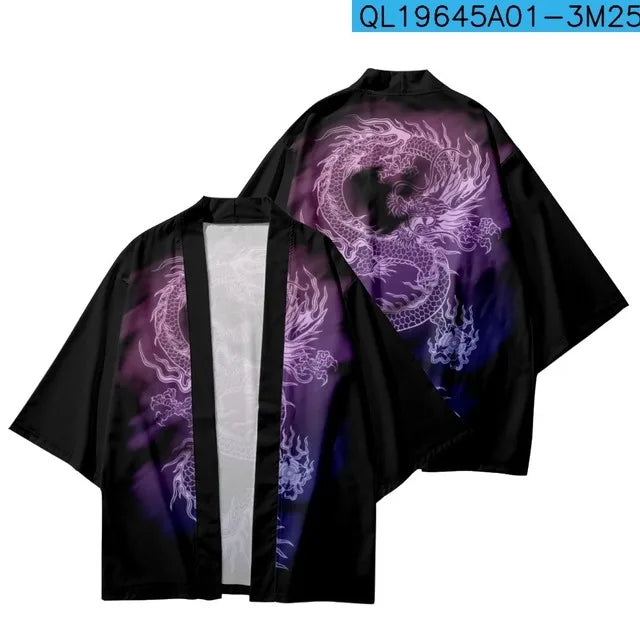
The Japanese dragon, or ryu, came to Japan through Chinese tradition and blended with local beliefs about water spirits. Unlike the fire-breathing dragon of European legend, the East Asian dragon is mostly a benevolent force tied to rain, rivers and the sea. It was seen as a guardian that could bring rain to the rice fields and protect against misfortune.
On clothing, the dragon traditionally stands for:
- Strength and authority, a creature that commands the elements.
- Protection, a symbol worn to ward off bad luck.
- Wisdom and ambition, the drive to rise higher.
Dragons are often paired with waves, clouds or a red sun, which reinforces their link to sky and water. A bold design like this dragon print kimono jacket works best when you want the jacket to be the focal point of an outfit: keep the rest simple, with plain black or dark denim underneath.
The crane (tsuru): longevity, loyalty and good fortune
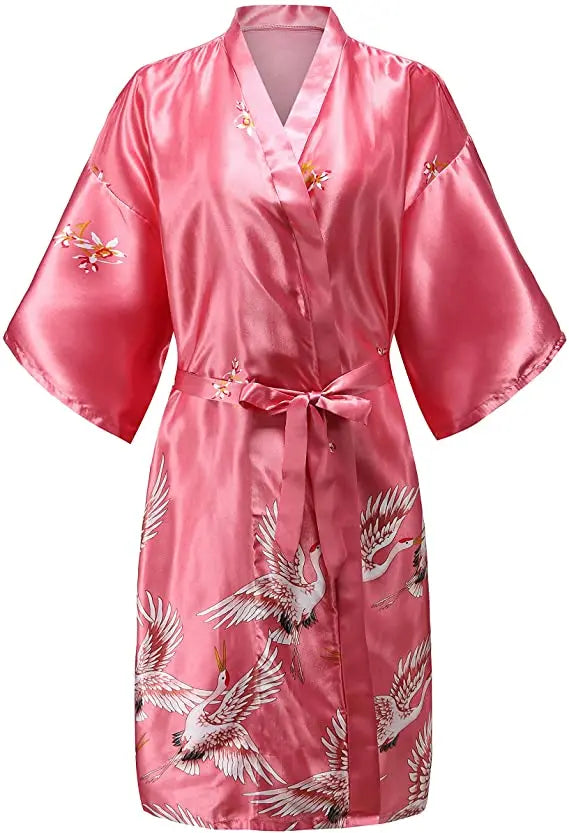
Few motifs are as closely tied to Japan as the red-crowned crane. A well-known saying holds that the crane lives a thousand years and the tortoise ten thousand, and the bird became a classic emblem of long life. Because cranes are known to pair for life, they also symbolize faithful love, which is why they appear so often on celebratory and wedding garments.
The crane is also linked to the tradition of senbazuru, folding a thousand paper cranes as a wish for health, peace or recovery. On a kimono, cranes in flight suggest grace, freedom and hope.
Cranes are frequently set among clouds, which turns the design into an image of rising above the everyday. A piece such as this crane and cloud kimono is a refined, calm choice: it pairs easily with neutral basics and suits both relaxed and slightly dressier looks.
The koi fish: perseverance and transformation
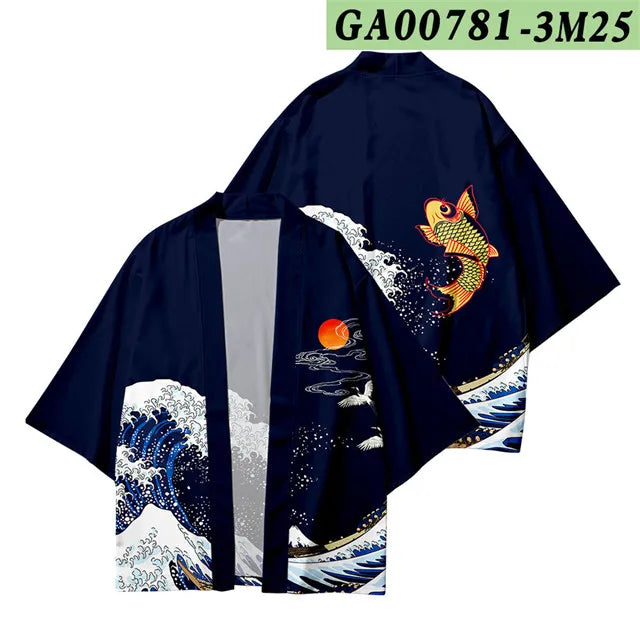
The koi carries one of the most inspiring stories in East Asian art. According to a Chinese legend, a carp that manages to swim up a waterfall known as the Dragon Gate is transformed into a dragon. The koi therefore represents determination, courage in the face of obstacles and the reward that follows hard effort.
In Japan, that idea lives on in the koinobori, the carp-shaped streamers flown for Children’s Day, expressing a wish that children grow up strong and resilient. On clothing, koi swimming upstream are a symbol for anyone working toward a goal.
The color of the koi adds nuance in popular interpretation: red and orange koi are often associated with love and energy, black koi with overcoming hardship, and gold koi with prosperity.
The Great Wave: nature’s force and resilience
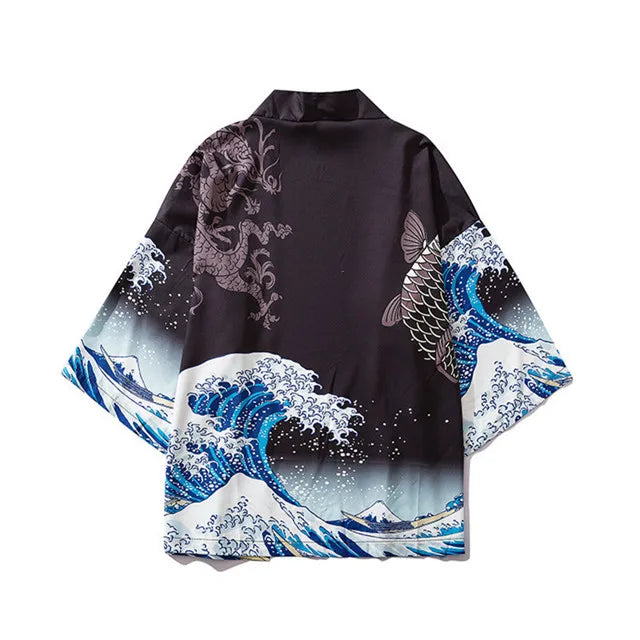
The wave motif on many modern kimono jackets is a tribute to The Great Wave off Kanagawa, the woodblock print by Katsushika Hokusai from his series Thirty-six Views of Mount Fuji, made in the early 1830s. Its curling crest and claw-like foam have become one of the most recognized images of Japanese art worldwide.
The wave expresses the power of nature and the humility of people before it, but also endurance: the boats in the print keep going. Older textile patterns use waves too, such as seigaiha, the overlapping arcs that suggest calm seas and a wish for lasting peace and good fortune.
When the wave meets the koi, the two meanings reinforce each other: strength in the face of a powerful current. That combination is the heart of this Great Wave and koi kimono, a strong pick if you like art-inspired pieces with a story.
The kitsune mask: cleverness, mystery and the spirit world
In Japanese folklore, the kitsune, or fox, is an intelligent and magical creature. Foxes are considered messengers of Inari, the Shinto deity associated with rice, harvest and prosperity, and fox statues guard many Inari shrines across Japan. Folk tales also describe foxes as shapeshifters and tricksters, able to take human form.
The fox mask appears at festivals, in traditional theater and in countless works of art. As a motif, it suggests:
- Intelligence and wit
- Mystery and a playful hidden side
- Protection and good luck, through the link to Inari
A red and white fox mask on a dark background is striking and slightly enigmatic. This kitsune mask kimono jacket fits wearers who enjoy folklore, anime-inspired style or simply a design that starts conversations.
Sakura, red sun, clouds and moon: the supporting motifs
Many designs combine a main creature with secondary elements. These background motifs have meanings of their own and shape the overall mood of the piece.
Sakura (cherry blossom)
Cherry blossoms bloom briefly and fall at their most beautiful. They are tied to the idea of mono no aware, a gentle awareness of impermanence, and to hanami, the custom of gathering under blooming trees in spring. On a kimono, sakura suggest renewal, beauty and living fully in the present.
The red sun
Japan’s name, Nihon, is often translated as the origin of the sun, and the red disc is a national emblem. In designs, a red sun adds energy and a sense of a new beginning, and it creates a powerful contrast behind dragons and cranes.
Clouds
Stylized clouds have long been read as auspicious, a sign of good fortune and of the heavens. In traditional painting, bands of cloud and mist also frame scenes and separate one moment from another, which is why clouds so often surround cranes and dragons.
The moon
The moon is linked to autumn, reflection and quiet beauty, and to tsukimi, the custom of moon viewing. Paired with pine trees, which stay green all year and symbolize endurance and longevity, it gives a design a contemplative, almost poetic feel.
Quick reference: kimono symbols and their meanings
| Motif | Traditional meaning | Best for |
|---|---|---|
| Dragon (ryu) | Power, protection, wisdom, ambition | Bold statement pieces |
| Crane (tsuru) | Longevity, faithful love, good fortune | Elegant, calm looks and gifts |
| Koi fish | Perseverance, courage, transformation | Anyone chasing a personal goal |
| Great Wave | Force of nature, resilience | Art lovers and graphic style |
| Kitsune mask | Cleverness, mystery, protection | Folklore and anime-inspired outfits |
| Sakura | Beauty, renewal, impermanence | Spring and softer palettes |
| Red sun | Energy, new beginnings, Japan | High-contrast designs |
| Clouds | Good fortune, the heavens | Pairing with cranes or dragons |
| Moon and pine | Reflection, endurance, longevity | Quiet, poetic styles |
How to choose a motif that fits you
- Start with the meaning. Pick the quality you want to carry: strength (dragon), resilience (koi, wave), grace (crane), wit (kitsune) or a fresh start (sakura, red sun).
- Consider the occasion. Large dragons and waves read as streetwear statements, while cranes and clouds feel more versatile for everyday wear or an evening out.
- Balance the outfit. A busy all-over print looks best over solid colors. Let the motif do the talking.
- Think about gifting. Cranes are a thoughtful choice for weddings or anniversaries, koi for someone starting a new chapter, and dragons for someone who likes a bold look.
If you are drawn to a more martial, warrior-inspired aesthetic, the samurai kimono range brings together darker tones and strong graphic motifs in the same spirit.
FAQ
What does a dragon on a kimono mean?
A dragon on a kimono traditionally symbolizes power, protection and wisdom. In East Asian belief, the dragon is a benevolent water spirit linked to rain and the sea, so it is worn as a sign of strength and a guard against misfortune.
What does the crane symbolize in Japanese culture?
The crane symbolizes longevity, faithful love and good fortune. Because cranes are believed to mate for life, they are a classic motif on celebratory garments, and folding a thousand paper cranes is a traditional wish for health and peace.
Is it respectful to wear a kitsune mask kimono?
Yes, the fox mask is a widely used motif in Japanese festivals, art and fashion. Wearing it as a design element is common; the key is to appreciate its folklore roots, notably its link to Inari, rather than treat it as a costume prop for mockery.
What is the meaning of koi fish on a kimono?
Koi represent perseverance and transformation, based on the legend of a carp that swims up a waterfall and becomes a dragon. A koi motif suits anyone who wants a reminder to keep going through challenges.
Can the same kimono combine several symbols?
Absolutely. Many designs pair a main motif with supporting ones, such as cranes with clouds, koi with waves, or a dragon with a red sun. The combination layers the meanings, for example strength rising against the current or grace above the everyday.