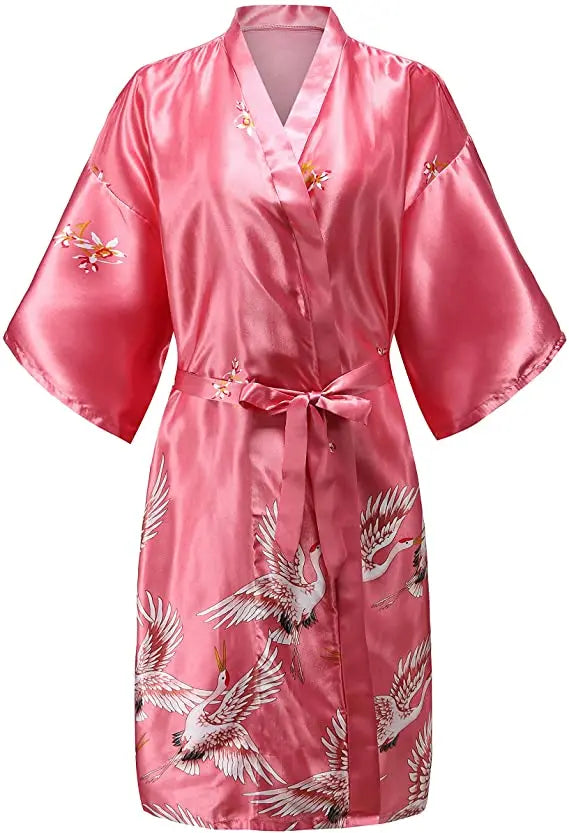
Satin vs Silk Kimono Robe: How to Choose the Right One (Fabric, Length, Care)
Torn between satin and silk for a kimono robe? Here’s the short answer. Satin is a weave, not a fiber. Most satin kimono robes are made from polyester, so they shine, drape well, cost less and handle everyday washing. Silk is a natural fiber. A silk robe breathes, controls temperature better and feels softer against the skin, but it costs more and needs gentler care. If you want an easy, glossy robe for lounging or a getting-ready photo, satin is usually the smart pick. If you care most about breathability and how the fabric feels, and you’re fine hand washing, go with silk.
This guide covers the real differences, then the details that matter just as much: length, fit, what you’ll use it for and how to keep it looking good.
Satin vs silk: what the words actually mean
A lot of the confusion comes from the labels. “Satin” describes how threads are woven: long floating threads on the surface give one side a smooth, reflective finish and leave the other side duller. You can weave satin from polyester, nylon, acetate or silk. “Silk” names the fiber itself, a protein filament made by silkworms, and it can be woven many ways, including as satin. The glossy fabric often called silk charmeuse is silk woven in a satin weave.
So the useful question isn’t really “satin or silk?” It’s “polyester satin or real silk?” When you shop, look at the fiber content on the product page. “Silky” and “silk-like” describe a look and feel, not a fiber.
Side-by-side comparison
| Feature | Polyester satin | Real silk |
|---|---|---|
| Look | High, even shine; prints come out bright | Softer, more pearly luster |
| Feel | Smooth and cool to the touch at first | Very soft, light and fluid |
| Breathability | Lower; can feel warm after long wear | Higher; helps regulate temperature |
| Durability | Resists wrinkles and fading well | Delicate; can water-spot and snag |
| Care | Often machine washable on a gentle cycle | Usually hand wash or dry clean |
| Budget | Accessible | Premium |
When a satin kimono robe is the better choice
A satin kimono robe makes sense for most people most of the time. Polyester satin holds dye very well, so bold prints like cranes, peonies and cherry blossoms stay crisp and saturated. It recovers from creases quickly, which helps if the robe lives on a hook or travels in a suitcase. And because it’s less fragile, you can wear it every day without worrying about a coffee splash.
Satin is also the go-to for occasions where looks come first:
- Bridal getting-ready: satin catches light nicely in photos, and buying matching robes for a whole group stays reasonable.
- Gifts: it looks luxurious out of the box, and the person you give it to won’t need special care instructions.
- Lounging and layering: a lightweight satin robe works over pajamas or as a light cover-up at home.
To see the range of prints and colors, browse our satin kimonos. Many are crane-print designs inspired by traditional Japanese motifs.
When silk is worth it
Silk earns its price when comfort over long hours matters more than durability. Because it’s a natural protein fiber, it breathes and handles moisture better than polyester, so many people find it more comfortable on warm evenings or for wearing straight out of the shower. It’s also very light, so a silk robe drapes close to the body and moves fluidly.
The trade-offs are real. Silk can show water marks, it fades with long sun exposure, and rough surfaces can snag it. Pick it if you’ll treat the robe as a keeper and you don’t mind hand washing. Our silk kimono collection brings together our silkiest styles. Check each product’s fabric details before buying so you know exactly what you’re getting.
Quick test for the fabric in your hands
- Warmth: silk warms up to body temperature quickly when you hold it. Polyester satin tends to stay cool and slick for longer.
- Shine: silk has a soft, shifting glow, while polyester satin usually has a brighter, more uniform shine.
- Label: the fiber content tag is the only reliable answer. Trust it over any marketing word.
Short or long: picking the right length
Length changes how a kimono robe feels and what it’s good for, just as much as fabric does.
Short kimono robes
A short robe usually ends somewhere between the hip and mid-thigh. It’s easy to move in, doesn’t drag on stairs and works well for getting ready, since nothing hangs low enough to brush the vanity. It also doubles as a light layer over a tank top or a swimsuit. Explore our short kimono styles if you want something quick and practical.
Midi and long kimono robes
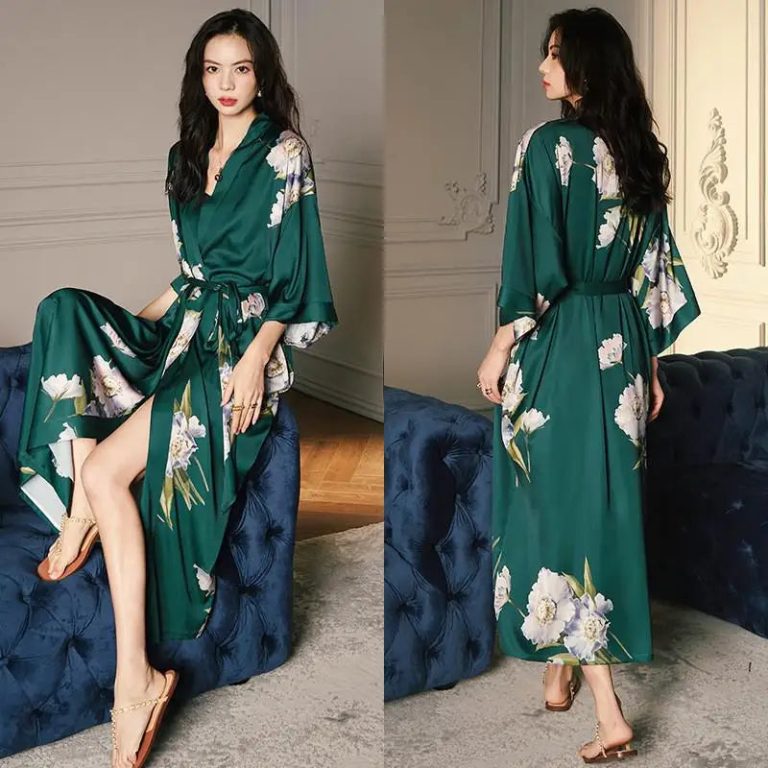
Knee-length and midi robes give you more coverage without feeling heavy. A long robe, falling to the calf or ankle, is the most dramatic option. It’s the classic dressing gown look and makes a full-length print look its best. Long robes also keep you warmer in cooler months. If you love that elegant, flowing silhouette, browse our long kimono robes.
Simple rule of thumb: if you’re shorter, a midi length often reads as “long” on you. Check the length measurement on each product page against your own height.
Fit and sizing tips for a women’s kimono robe
Kimono robes are cut loose, with wide sleeves and a wrap front held by a sash. That forgiving shape is part of the appeal, but a few points are worth checking:
- Read the size chart, not just the label. Compare the robe’s chest or bust and length measurements with a robe you already own and like.
- Think about the overlap. The front panels should cross comfortably so the robe stays closed when you sit or walk.
- Consider the sleeves. Wide kimono sleeves look beautiful but can get in the way when doing makeup or cooking. Pushing them up or choosing a shorter style helps.
- Size up for layering. If you plan to wear the robe over pajamas or a sweater, a little extra room keeps it from pulling across the back.
Choosing by occasion
- Everyday kimono bathrobe: polyester satin in any length, chosen for easy washing. Darker colors and busy prints hide small marks well.
- Bridal party and special occasions: satin in a coordinated color, or one standout print for the bride. White, blush pink and black are timeless picks.
- Gift: a satin robe in a classic print is a safe bet. If you know the person loves natural fibers and won’t mind the extra care, silk feels more indulgent.
- Warm-weather lounging: silk or a very lightweight satin, in a short or midi length.
- Statement piece: a robe with a bold, high-contrast print, such as our black satin kimono robe with red cranes, where the dark background makes the red birds stand out.
How to wash and care for your kimono robe
Always follow the care label first. The tips below are general good practice for each fabric type.
Caring for polyester satin
- Turn the robe inside out and place it in a mesh laundry bag to prevent snags.
- Wash on a gentle, cool cycle with a mild detergent. Skip fabric softener, which can dull the shine.
- Air dry on a padded hanger or flat. High dryer heat can damage synthetic fibers.
- If needed, iron on a low setting on the reverse side, or use a steamer.
Caring for silk
- Hand wash in cool water with a detergent made for delicates or silk, or have it dry cleaned if the label says so.
- Don’t wring or twist. Press out water gently by rolling the robe in a clean towel.
- Dry flat or on a hanger away from direct sunlight and heat.
- Steam or iron on the silk setting, inside out, with a pressing cloth.
Storage
Hang your robe on a wide or padded hanger so the shoulders keep their shape, and leave room around it so it doesn’t crush. For long-term storage, a breathable cotton garment bag works better than plastic, which can trap moisture.
The bottom line
For most shoppers, a polyester satin kimono robe gives you the best mix of looks, durability and easy care. Silk is the upgrade for comfort and breathability if you’re happy to treat it gently. After fabric, choose a length that fits how you’ll actually wear the robe, then check the measurements before you order. When you’re ready, start with our full range of kimono robes for women, where you can compare prints, colors and lengths in one place.
FAQ
Is satin the same as silk?
No. Satin is a weave that creates a glossy surface, while silk is a natural fiber. A robe can be satin-woven silk, but most satin robes are made from polyester. Check the fiber content to know which one you have.
Which is better for sleeping or lounging, satin or silk?
Silk usually feels more comfortable for long wear because it breathes better and adapts to body temperature. Polyester satin feels smooth and cool at first but can get warm over time. For short stretches of lounging, either works well.
Can I machine wash a satin kimono robe?
Many polyester satin robes can go in the machine on a gentle, cool cycle inside a mesh bag, but always check the care label first. Air drying is the safest way to protect the fabric and the print.
What length of kimono robe is best for a bridal party?
Short and midi robes are the most practical for getting ready, since they stay clear of makeup tables and are easy to move in. Long robes look more dramatic in photos. Many groups pick a short length for comfort and save a long style for the bride.
Is a kimono robe the same as a kimono dressing gown or bathrobe?
The terms overlap. A kimono robe, kimono dressing gown and kimono bathrobe all describe a loose wrap robe with wide sleeves and a sash, inspired by the shape of the traditional Japanese kimono. The difference is mostly fabric and length: lightweight satin for lounging, thicker fabrics for after the bath.